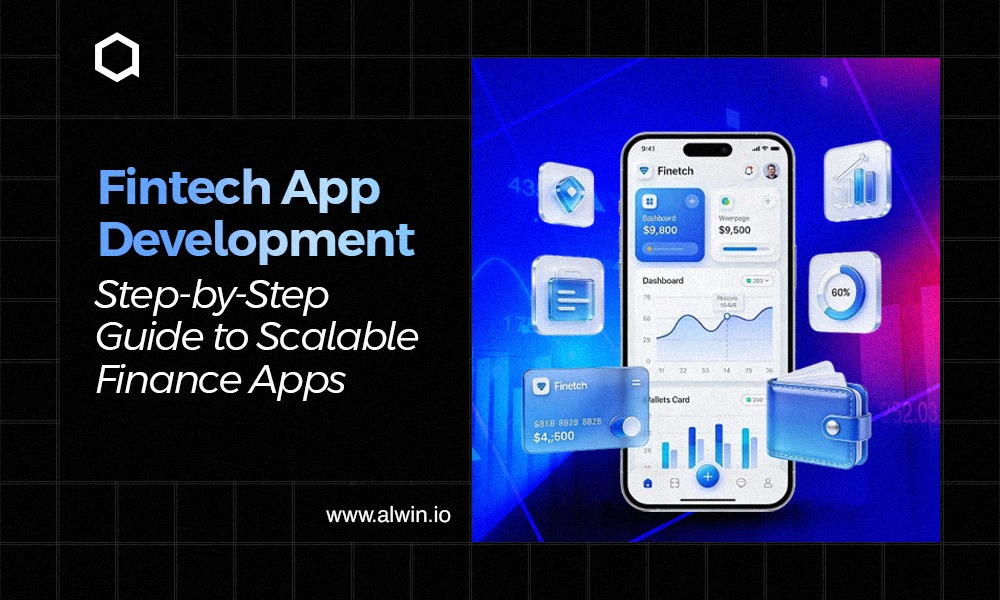
Building a fintech app today is no longer about moving money faster. It's about earning trust, keeping compliant, and scaling without breaking under pressure. With users demanding better experiences from their apps and regulators requiring watertight security, the game of fintech development has just gotten completely different.
So, how do you build an app that is innovative, secure, and ready to grow?
That is just what this guide is for. In this Ultimate Fintech App Development Guide, we will walk you through everything you need to know to create secure, scalable financial apps-from the right technology choices and security practices to compliance, performance, and future-proof design. Whether you are a fresh startup or a large well-established business, this guide will take you through building fintech solutions that users can really rely on.
Fintech App Development- An Overview
Fintech app development is more than just creating a digital system for making payments; it is “the reinvention of the way people interact with money in their everyday lives.”
FinTech app development combines the concepts of finance, technology, security, and user interface to deliver quick, dependable, and intelligent solutions through internet-based applications or other digital media.
At its core, fintech app development involves designing, developing, and maintaining applications that contain critical information while ensuring they are user-friendly.
More Day-to-Day Examples for Easy Understanding
Morning routine: You check your banking app to see if your salary has been credited and instantly pay your utility bills.
Shopping online: A fintech payment gateway securely processes your card or UPI payment in seconds.
Sending money abroad: A remittance app converts currencies and transfers funds internationally at lower fees than traditional banks.
Managing credit: A credit score app tracks your credit health and suggests ways to improve it.
Types of Fintech Applications
Fintech applications come in many forms, each designed to solve a specific financial need. Below are the main types of fintech applications, explained in a simple and easy-to-understand way with everyday context.
1. Digital Banking Applications
These apps enable users to manage their bank accounts online without needing to visit a branch. Users can check balances, transfer money, pay bills, and manage cards anytime. Examples include mobile banking apps and neobanks that operate fully online.
2. Payment & Digital Wallet Applications
Payment apps enable fast and secure money transfers between individuals and businesses. They support QR payments, UPI, card payments, and contactless transactions. Everyday examples include paying for groceries or splitting bills with friends.
3. Investment & Trading Applications
These apps help users invest in stocks, mutual funds, ETFs, or cryptocurrencies. They provide real-time market data, portfolio tracking, and analytics. Users can start investing with minimal effort and small amounts.
4. Lending & Credit Applications
Lending apps offer personal loans, business loans, or Buy Now Pay Later (BNPL) services. They use AI-based credit scoring to approve loans quickly. This helps users access funds without lengthy paperwork.
5. Insurance (InsurTech) Applications
InsurTech apps simplify buying and managing insurance policies. Users can compare plans, file claims, and track policy details digitally. This reduces paperwork and improves transparency.
6. Personal Finance & Budgeting Applications
These apps help users track expenses, manage budgets, and plan savings goals. They automatically categorize spending and provide financial insights. This makes it easier to control monthly expenses.
7. Remittance & Cross-Border Payment Applications
Remittance apps allow users to send money internationally at lower fees and faster speeds. They handle currency conversion and compliance automatically. These are commonly used by expatriates and global businesses.
8. Wealth Management Applications
Wealth management apps offer personalized financial advice and portfolio management. They use AI and robo-advisors to recommend investment strategies. This makes professional wealth management accessible to more users.
9. Accounting & Expense Management Applications
Designed mainly for businesses, these apps track expenses, invoices, payroll, and taxes. They automate financial reporting and compliance. This helps businesses save time and reduce errors.
10. RegTech Applications
RegTech apps help financial institutions meet regulatory and compliance requirements. They monitor transactions, manage KYC/AML processes, and generate reports. This ensures compliance while reducing operational costs.
Core Features of Fintech App Development
Fintech app development focuses on creating secure, reliable, and user-friendly financial applications that handle sensitive data and real-time transactions. Each feature plays a crucial role in building user trust, ensuring compliance, and supporting long-term scalability.
Advanced Security & Data Encryption
Security is the foundation of fintech applications. Features such as end-to-end encryption, tokenization, secure APIs, multi-factor authentication (MFA), and biometric verification protect user data and financial transactions. Regular security audits and fraud detection systems further strengthen platform reliability.
Intuitive User Interface & errorless UX
A well-designed UI/UX simplifies complex financial processes. Clear dashboards, easy navigation, minimal input steps, and accessible design ensure users can complete transactions quickly and confidently. A smooth experience directly improves user retention and satisfaction.
KYC, AML & Regulatory Compliance
Fintech apps must comply with regional and global regulations. Built-in KYC and AML processes verify user identities, monitor transactions, and generate compliance reports. This ensures legal operation and reduces the risk of fraud and penalties.
Real-Time Transaction Processing
Users expect instant transaction execution and updates. Real-time processing enables immediate balance updates, fund transfers, and payment confirmations. Push notifications and alerts keep users informed and build transparency.
Secure Payment Gateway Integration
Reliable payment gateway integration supports multiple payment methods, including cards, digital wallets, bank transfers, and UPI. This flexibility enhances user convenience while maintaining secure transaction handling.
Scalability & Cloud Infrastructure
Fintech apps are designed to scale as user numbers and transaction volumes grow. Cloud-based infrastructure ensures high availability, fast performance, and errorless expansion without service disruption.
Data Analytics & Financial Insights
Advanced analytics tools provide insights into user behavior, spending patterns, and financial performance. These insights help users make informed decisions and allow businesses to optimize services and detect anomalies.
API & Third-Party Service Integration
APIs enable seamless integration with banks, payment providers, credit bureaus, and external financial services. This expands functionality and allows fintech apps to offer connected, end-to-end financial solutions.
Automation & Smart Workflow Management
Automation streamlines repetitive tasks such as transaction processing, reporting, loan approvals, and alerts. Smart workflows improve operational efficiency, reduce errors, and speed up service delivery.
Cross-Platform & Multi-Device Support
Fintech apps are built to work smoothly across web, iOS, and Android platforms. Consistent performance and design across devices ensure accessibility and a unified user experience.
Personalization & AI-Powered Features
AI-driven personalization recommends financial products, offers insights, and predicts user needs. This creates tailored experiences and improves engagement.
Audit Logs & Transparency
Detailed audit logs track all transactions and system activities. This improves accountability, simplifies audits, and builds user trust.
Step-by-Step Process of Fintech App Development
Step 1: Identify the Problem & Define the Idea
Everything starts with a clear idea. First, you identify a real financial problem—such as slow payments, poor budgeting tools, or complex loan approvals. Then, you define how your fintech app will solve that problem better than existing solutions.
Step 2: Market Research & Feasibility Analysis
Next, research your target audience, competitors, and regional financial regulations. This step helps you understand user expectations, market demand, and legal requirements. It ensures your app idea is practical and profitable.
Step 3: Define Features & App Requirements
Here, you list all core and advanced features like login, payments, dashboards, notifications, and security. Technical requirements, platforms (Android, iOS, web), and third-party integrations are finalized. This creates a clear development roadmap.
Step 4: UI/UX Design & Prototyping
Designers create wireframes and interactive prototypes that show how users will move through the app. The focus is on simplicity, clarity, and trust. A good design makes complex financial actions feel easy and safe.
Step 5: Choose the Right Technology Stack
Developers select technologies for frontend, backend, databases, APIs, and cloud infrastructure. The stack is chosen to ensure security, speed, scalability, and compliance. This decision affects long-term performance.
Step 6: Backend Development (Core Functionality)
The backend handles business logic, databases, APIs, transaction processing, and user management. Security measures like encryption and authentication are built in at this stage. This forms the foundation of the fintech app.
Step 7: Frontend Development (User Interface)
Frontend developers build the app screens that users interact with. This includes dashboards, forms, charts, and notifications. The goal is to match design with functionality for a smooth user experience.
Step 8: Security Implementation & Compliance Setup
Advanced security features like multi-factor authentication, biometric login, fraud detection, and secure data storage are added. KYC, AML, and regulatory compliance processes are integrated to meet legal standards.
Step 9: Third-Party Integration
The app is connected to payment gateways, banks, analytics tools, and external APIs. These integrations enable real-time payments, identity verification, and financial reporting.
Step 10: Testing & Quality Assurance
The app undergoes extensive testing for functionality, performance, security, and compliance. Bugs, vulnerabilities, and performance issues are fixed. This ensures the app is stable and secure before launch.
Step 11: Deployment & Launch
Once testing is complete, the app is deployed on cloud servers and published on app stores. Monitoring tools are activated to track performance, usage, and system health.
Step 12: Post-Launch Monitoring & Continuous Improvement
After launch, the app is continuously monitored for issues, updates, and security threats. User feedback is used to improve features and add new capabilities. Regular updates keep the app competitive and compliant.
Ending Thoughts
Building a fintech app demands more than just technical expertise it requires trust, precision, and a deep understanding of financial ecosystems. Partnering with a reputed provider like WeAlwin gives you the confidence to turn your fintech vision into a secure, scalable, and future-ready application.
At WeAlwin, the best fintech startup business ideas are driven by strategy and innovation. From ideation and architecture design to deployment and ongoing support, every stage is handled with a strong focus on security, regulatory compliance, and performance. Our team builds fintech apps that are not only user-friendly but also engineered to handle real-time transactions, high user volumes, and evolving regulatory requirements.
What sets WeAlwin apart is our end-to-end approach. We combine advanced technologies, industry best practices, and a deep understanding of financial workflows to deliver apps that grow with your business. Whether you’re launching a digital wallet, banking platform, investment app, or payment solution, WeAlwin ensures your fintech product is built to inspire trust, drive engagement, and succeed in a competitive market.